
Contents
Overview
The seeds of Modernism were sown in the late 19th century, a period of immense societal upheaval driven by industrialization and scientific advancement. Thinkers and artists began questioning the established norms of Victorian society, seeking to break free from what they perceived as stifling conventions. Precursors like Charles Baudelaire's poetry, with its focus on urban life and subjective experience, and the philosophical inquiries of Friedrich Nietzsche into morality and the human condition, laid crucial groundwork. The early 20th century saw this nascent movement coalesce, with figures like Henri Matisse pushing the boundaries of color in painting and James Joyce experimenting with stream-of-consciousness in literature. The trauma of World War I acted as a powerful catalyst, shattering the optimism of the Belle Époque and intensifying the modernist critique of tradition, leading to a surge of avant-garde movements like Dadaism and Surrealism in the 1910s and 1920s.
⚙️ How It Works
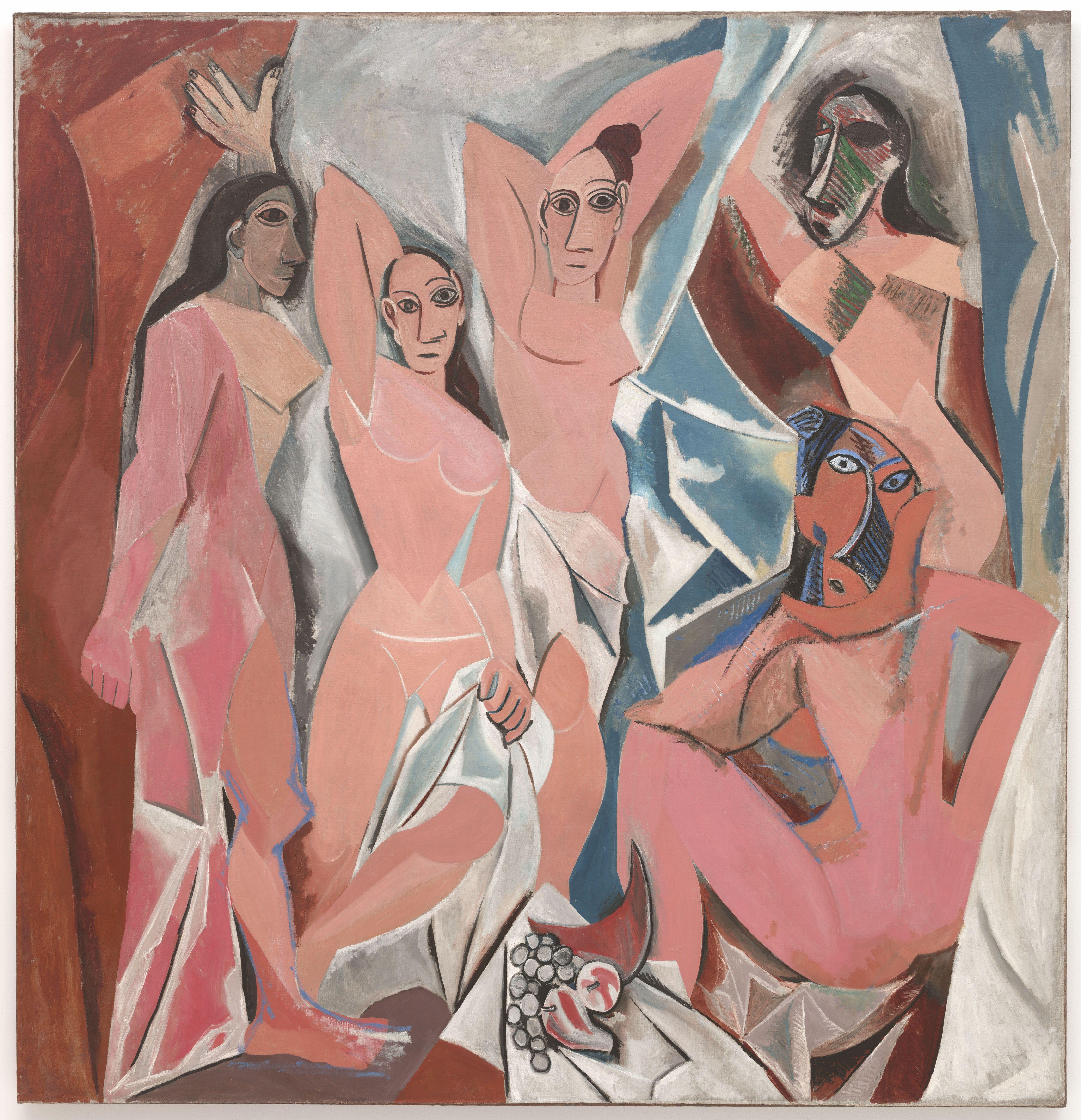
Modernism fundamentally worked by dismantling and reassembling established artistic and philosophical frameworks. In literature, this meant abandoning linear narratives, exploring psychological depth through techniques like stream-of-consciousness (famously employed by Virginia Woolf in works like Mrs. Dalloway), and experimenting with language itself. Visual arts saw a radical departure from mimesis, with movements like Cubism (pioneered by Pablo Picasso and Georges Braque) fragmenting objects into geometric forms, and Abstract Expressionism focusing on the artist's emotional expression through non-representational means. Architecture, epitomized by figures like Le Corbusier and the Bauhaus school, embraced functionalism, clean lines, and new materials like steel and concrete, rejecting historical ornamentation in favor of "form follows function." Philosophically, Modernism grappled with existential questions, the nature of consciousness, and the impact of secularization, often questioning objective truth and emphasizing individual perception, as seen in the works of Martin Heidegger.
📊 Key Facts & Numbers
The modernist era produced an astonishing output, with estimates suggesting tens of thousands of significant literary works, artworks, and architectural projects were created between 1890 and 1950. Over 50 distinct artistic movements are commonly associated with Modernism, ranging from Impressionism's early explorations of light and color to the radical anti-art stance of Dadaism. Architectural innovations led to the construction of iconic modernist structures like Fallingwater by Frank Lloyd Wright, completed in 1939, and the Bauhaus building in Dessau, inaugurated in 1926. In music, composers like Igor Stravinsky pushed harmonic and rhythmic boundaries, with his 1913 ballet The Rite of Spring famously causing a riot at its premiere. The economic impact was also significant, with the art market for modernist works reaching billions of dollars annually by the late 20th century.
👥 Key People & Organizations
Numerous individuals and institutions were central to the modernist project. In literature, T.S. Eliot, Ezra Pound, and William Faulkner redefined poetic and narrative forms. Visual arts were propelled by pioneers such as Wassily Kandinsky, who championed abstraction, and Salvador Dalí, a leading figure of Surrealism. The Bauhaus school in Germany, founded by Walter Gropius in 1919, was a pivotal hub for interdisciplinary modernist design and architecture, attracting talents like Mies van der Rohe and Paul Klee. Philosophical discourse was shaped by thinkers like Edmund Husserl, the founder of phenomenology, and Jean-Paul Sartre, a key figure in existentialism. Major galleries and publishing houses, such as Solomon R. Guggenheim's foundation and Albert C. Baugh's influential literary histories, played critical roles in disseminating modernist ideas.
🌍 Cultural Impact & Influence
Modernism's influence is pervasive, shaping nearly every facet of contemporary culture. Its emphasis on innovation and subjective experience continues to inform artistic creation, from independent cinema to experimental music. The architectural principles of functionalism and minimalist design, born from modernist ideals, are evident in countless buildings worldwide. In literature, the exploration of interiority and fragmented narratives remains a staple. Modernist critiques of mass media and societal alienation resonate strongly in the digital age, influencing how we understand identity and community. The very concept of the "avant-garde," a term popularized during this period, continues to describe artistic movements that push boundaries. Even in philosophy, modernist inquiries into epistemology and ethics laid the groundwork for much of 20th and 21st-century thought, impacting fields from linguistics to critical theory.
⚡ Current State & Latest Developments
While the peak of Modernism is generally considered to have ended around the mid-20th century, its legacy is far from dormant. Contemporary art and design continue to engage with, react against, and build upon modernist foundations. For instance, the resurgence of interest in brutalist architecture, a style often categorized as late Modernism, demonstrates a renewed appreciation for its raw aesthetic. Digital art and interactive media explore new frontiers of subjective experience and abstraction, echoing modernist experiments. The ongoing debates about the role of art in society, the nature of truth, and the impact of technology are direct descendants of modernist philosophical concerns. Furthermore, institutions like the Museum of Modern Art (MoMA) in New York, founded in 1929, remain active custodians and interpreters of the modernist canon, continually re-contextualizing its works for new generations.
🤔 Controversies & Debates
Modernism was not without its detractors and internal contradictions. A significant debate centers on its perceived elitism and detachment from the concerns of ordinary people, a criticism often leveled against highly abstract or experimental works. Some argue that Modernism's relentless pursuit of novelty led to a superficiality, a "cult of the new" that devalued historical continuity and craft. The movement's often Eurocentric perspective has also faced scrutiny, with critics pointing to its limited engagement with non-Western artistic traditions. Furthermore, the philosophical underpinnings of Modernism, particularly its faith in progress and reason, were challenged by the horrors of World War II and the rise of postmodern thought, which questioned grand narratives and objective truth. The very definition of Modernism remains contested, with scholars debating its precise temporal boundaries and core characteristics.
🔮 Future Outlook & Predictions
The future trajectory of Modernism's influence is likely to be one of continued adaptation and reinterpretation. As global interconnectedness increases, we may see a more diverse and inclusive "global modernism" emerge, integrating a wider range of cultural perspectives. Technological advancements, particularly in artificial intelligence and virtual reality, offer new mediums for modernist principles of abstraction and subjective experience. The ongoing dialogue between Modernism and postmodernism will undoubtedly continue, with future artistic and philosophical movements likely to synthesize or react against both. There's also a potential for a "neo-modernism" that re-engages with modernist ideals of functionality, social purpose, and aesthetic clarity, perhaps in response to the perceived fragme
Key Facts
- Category
- movements
- Type
- topic