
Contents
Overview
The seeds of Surrealism were sown in the fertile ground of post-World War I Europe, a period marked by profound disillusionment and a questioning of established norms. Emerging formally in Paris in 1924 with the publication of André Breton's Manifesto of Surrealism, the movement drew heavily from the theories of Sigmund Freud and the Dadaist spirit of anti-art. Precursors can be traced to the writings of Guillaume Apollinaire, who coined the term 'surrealism' in his 1917 play Les Mamelles de Tirésias, and the automatist experiments of Louis Aragon and Philippe Soupault in their 1920 work Les Champs Magnétiques. The movement rapidly expanded beyond Paris, attracting artists and writers across Europe and eventually the globe, establishing international bureaus and exhibitions by the late 1920s and early 1930s.
⚙️ How It Works
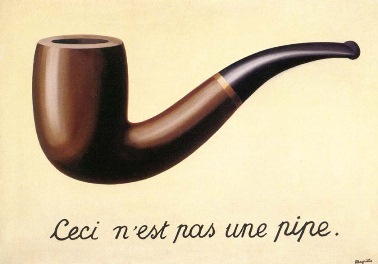
At its heart, Surrealism operates through the deliberate unleashing of the unconscious mind, bypassing rational control and conventional aesthetics. The primary method employed is 'psychic automatism,' a technique involving spontaneous writing, drawing, or painting without conscious censorship. This often results in unexpected juxtapositions, such as Salvador Dalí's melting clocks in The Persistence of Memory or René Magritte's enigmatic imagery like The Treachery of Images ('Ceci n'est pas une pipe'). Techniques like frottage, decalcomania, and exquisite corpse were developed to further disrupt logical thought processes and invite chance encounters, aiming to reveal hidden connections and desires.
📊 Key Facts & Numbers
Surrealism's impact is quantifiable by its sheer reach and longevity. The movement officially lasted until the mid-1940s, but its influence permeated art and culture for decades, with estimates suggesting over 100 major Surrealist exhibitions held worldwide between 1925 and 1945. The works of its key figures, like Max Ernst and Joan Miró, now command millions at auction, with Dalí's The Persistence of Memory alone being viewed by millions annually. The Surrealist movement published at least 30 significant journals and periodicals, including La Révolution surréaliste and Minotaure, disseminating its ideas to an estimated readership of tens of thousands across continents.
👥 Key People & Organizations
The intellectual and artistic engine of Surrealism was undeniably André Breton, who authored the movement's foundational manifestos and acted as its principal theorist and organizer. Other pivotal figures include painters like Salvador Dalí, René Magritte, Max Ernst, and Joan Miró, whose distinct visual styles became synonymous with the movement. In literature, Louis Aragon, Paul Éluard, and Robert Desnos were instrumental. Filmmakers such as Luis Buñuel and Salvador Dalí collaborated on groundbreaking films like Un Chien Andalou. Key organizations included the Bureau of Surrealist Research in Paris and later, Surrealist groups in New York and London.
🌍 Cultural Impact & Influence
The cultural footprint of Surrealism is immense, extending far beyond the art world. Its emphasis on the irrational and the subconscious profoundly influenced Abstract Expressionism, particularly the work of artists like Jackson Pollock who embraced automatism. In cinema, its techniques can be seen in the works of directors like David Lynch and Terry Gilliam. The movement's aesthetic also permeated advertising, fashion, and popular culture, with its dreamlike imagery and unexpected juxtapositions becoming a recurring motif. The very concept of the 'surreal' has entered everyday language to describe anything bizarre or illogical.
⚡ Current State & Latest Developments
While the organized Surrealist movement largely dissolved by the mid-1940s, its core tenets continue to resonate and evolve. Contemporary artists, writers, and filmmakers still draw inspiration from Surrealist principles, exploring themes of the subconscious, altered states of consciousness, and the uncanny. The rise of digital art and virtual reality offers new mediums for creating surreal experiences, pushing the boundaries of what was once imagined. Furthermore, academic study and retrospectives of Surrealist works continue to draw significant attention, indicating a sustained interest in its philosophical and aesthetic contributions.
🤔 Controversies & Debates
Surrealism was not without its critics and internal conflicts. A major point of contention was the movement's relationship with politics, particularly its flirtation with Communism and Marxism, which led to expulsions and schisms, notably Breton's break with Louis Aragon and Paul Éluard over their perceived Stalinism. The movement also faced accusations of misogyny, with women artists often relegated to muse-like roles or excluded from leadership positions, despite notable contributions from figures like Remedios Varo and Leonora Carrington. The commercialization of Surrealist imagery also sparked debate about its authenticity and revolutionary potential.
🔮 Future Outlook & Predictions
The future of Surrealism lies in its adaptability to new technologies and evolving understandings of consciousness. As neuroscience advances our comprehension of dreams and the subconscious, artists may find new avenues for surrealist exploration. The increasing prevalence of AI-generated art also presents a fascinating parallel to Surrealist automatism, raising questions about authorship and the nature of creativity. We might see a resurgence of interest in Surrealist political engagement, particularly in response to global crises, as artists seek to use their work to challenge dominant narratives and inspire radical change.
💡 Practical Applications
Surrealism's principles have found practical application in numerous fields beyond fine art. In psychotherapy, techniques inspired by dream analysis and free association are used to help patients explore their inner lives. In advertising, surreal imagery is frequently employed to create memorable and attention-grabbing campaigns, tapping into subconscious desires and associations. Filmmakers utilize surrealist techniques to evoke specific moods, explore psychological themes, or create fantastical worlds. Even in game design, surreal elements are used to craft unique and immersive player experiences, challenging players' perceptions of reality.
Key Facts
- Category
- movements
- Type
- movement