
Contents
Overview
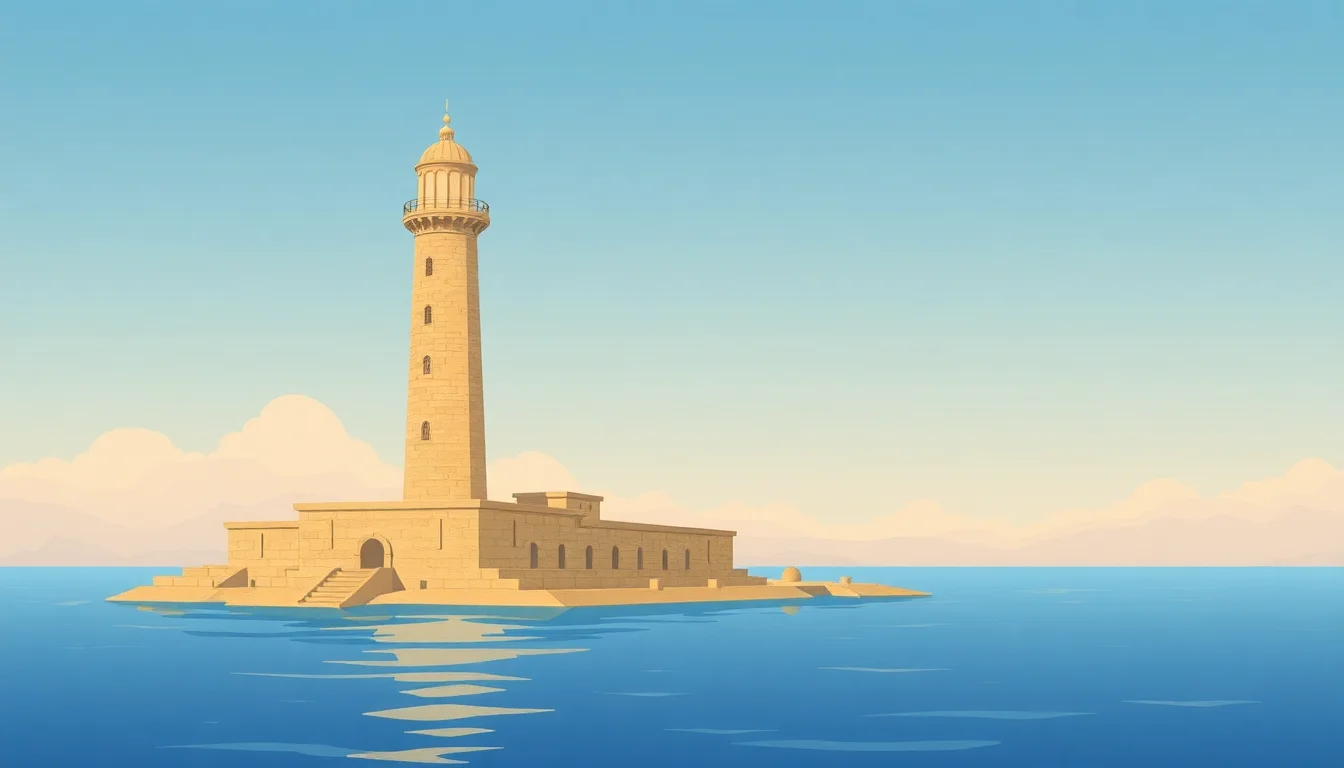
The Pharos was one of the most astonishing Seven Wonders, a towering lighthouse that guided mariners into the bustling port for over a millennium. Unlike many ancient structures that served purely religious or commemorative purposes, the Pharos was a vital piece of infrastructure, a beacon of civilization and commerce. Its sheer scale and innovative design set it apart, making it a symbol of Hellenistic ingenuity and the grandeur of Ptolemaic Egypt. It wasn't just a light; it was a statement of power and technological prowess visible for miles around.
📍 Location & Historical Context
Situated on the island of Pharos in Alexandria, Egypt, this colossal structure was commissioned by Ptolemy I Soter and completed around 280 BCE during the reign of his son, Ptolemy II Philadelphus. Alexandria itself was a vibrant cosmopolitan hub, a nexus of trade and culture at the crossroads of the Mediterranean and the Nile. The lighthouse's strategic placement was crucial for navigating the often-treacherous waters and the complex network of sandbars that characterized the harbor, ensuring safe passage for the countless ships that docked there, bringing goods and ideas from across the known world.
💡 Engineering Marvels & Function
The engineering behind the Pharos was revolutionary for its time. Estimates suggest it stood between 100 and 137 meters (330 to 450 feet) tall, making it one of the tallest man-made structures for centuries. It was reportedly built in three stages: a square base, an octagonal middle section, and a cylindrical top. At its apex, a large fire burned, its light amplified by a mirror (possibly polished bronze or even glass), which could be seen from up to 35 miles away. Some accounts even suggest a statue crowned the very top, though its identity remains debated.
⏳ Decline and Disappearance
The Pharos's long service came to an end through a series of devastating earthquake that struck Alexandria between the 10th and 14th centuries CE. These seismic events gradually weakened the structure, causing significant damage. By the late 14th century, the lighthouse was largely in ruins, with only the lower courses of stone remaining. Subsequent centuries saw the salvaged stones repurposed for other constructions, most notably the Citadel of Qaitbay, built on the same site in the 15th century, effectively burying the remnants of the ancient wonder.
⭐ Legacy and Influence
The influence of the Pharos of Alexandria is undeniable, extending far beyond its physical existence. The very word 'pharos' became synonymous with 'lighthouse' in many Romance languages (e.g., French 'phare', Italian 'faro'). Its success demonstrated the practical application of advanced engineering for civic benefit, inspiring similar structures throughout antiquity and the Middle Ages. The concept of a monumental lighthouse as a symbol of a city's prominence and maritime strength continues to resonate in coastal communities worldwide, a testament to its enduring impact on navigation and urban identity.
🔭 Modern Explorations and Discoveries
While the lighthouse itself is gone, archaeological and underwater explorations have brought fragments of its story back to light. Since the 1960s, underwater archaeologists have discovered numerous stone blocks, statues, and architectural elements in the waters off Alexandria's coast, believed to be remnants of the Pharos. These findings, including colossal statues and carved stones, provide tangible links to the structure and offer clues about its construction and eventual demise, fueling ongoing research into its precise appearance and the circumstances of its collapse.
🤔 Debates and Mysteries
The exact height of the Pharos remains a subject of scholarly debate, with figures ranging widely based on interpretations of ancient texts and archaeological evidence. Another key mystery is the nature of the mirror used to reflect the firelight; was it a flat polished metal surface, a parabolic reflector, or perhaps even a lens? The precise sequence and impact of the earthquakes that led to its destruction are also points of contention, with historians piecing together fragmented records to understand the lighthouse's final centuries.
✨ Visiting the Site Today (Hypothetically)
While the original Pharos is long gone, the site where it stood is now occupied by the impressive Citadel of Qaitbay, a 15th-century defensive fortress. Visitors can explore the citadel, which offers stunning views of the Mediterranean Sea and the modern city of Alexandria. Although you cannot see the ancient lighthouse itself, standing on this historic ground provides a powerful connection to the past and the legendary structure that once dominated the skyline. The surrounding waters are also a site of ongoing archaeological interest for those fascinated by the submerged history of Alexandria.
Key Facts
- Year
- c. 280-247 BC
- Origin
- Ptolemaic Kingdom, Alexandria, Egypt
- Category
- Ancient Wonders
- Type
- Monument
Frequently Asked Questions
When was the Pharos of Alexandria built?
Construction of the Pharos began during the reign of Ptolemy I Soter and was completed around 280 BCE, during the reign of his son, Ptolemy II Philadelphus. This places its construction firmly within the Hellenistic period, a time of significant cultural and technological advancement in the Mediterranean world.
How tall was the Pharos?
Estimates for the Pharos's height vary considerably among historians and archaeologists, generally ranging from 100 to 137 meters (approximately 330 to 450 feet). This made it one of the tallest structures in the world for many centuries after its completion.
What happened to the Pharos?
The Pharos was gradually destroyed by a series of earthquakes that struck Alexandria between the 10th and 14th centuries CE. The seismic activity caused significant damage, leading to its eventual collapse and ruin. The stones were later salvaged and used in other constructions, most notably the Citadel of Qaitbay.
Can I see the Pharos today?
The original Pharos no longer stands. However, the site where it was located is now occupied by the Citadel of Qaitbay, a 15th-century fortress. Underwater archaeological sites near Alexandria also contain remnants believed to be from the Pharos, accessible through specialized diving expeditions.
Why was the Pharos important?
The Pharos was crucial for maritime navigation, guiding ships safely into the busy port of Alexandria, which was a major center of trade and commerce. It also served as a symbol of the city's wealth, power, and technological sophistication during the Hellenistic era.
What does 'Pharos' mean?
The name 'Pharos' originally referred to the island off the coast of Alexandria where the lighthouse was built. Over time, the word became synonymous with 'lighthouse' itself in many languages, such as French ('phare') and Italian ('faro'), highlighting the structure's iconic status.