
Contents
Overview
The Minoan civilization, flourishing on Crete from roughly 2700 to 1450 BCE, stands as one of Europe's earliest advanced Bronze Age societies. Renowned for their sophisticated palace complexes like Knossos and Phaistos, intricate frescoes depicting vibrant scenes of nature and ritual, and a unique writing system (Linear A), the Minoans were a maritime power with extensive trade networks across the Mediterranean. Their culture, characterized by a seemingly peaceful society and a focus on bull-leaping rituals, left an indelible mark on Aegean art and architecture, influencing later Mycenaean civilization. The eventual decline and collapse of Minoan society remain subjects of debate, with theories ranging from volcanic eruptions to invasion.
🏛️ What is Minoan Civilization?
The Minoan Civilization stands as a monumental testament to early European ingenuity, flourishing on the island of Crete during the Bronze Age, roughly from 2700 to 1450 BCE. Often hailed as the first advanced civilization in Europe, its influence permeated the Aegean world. This culture is celebrated for its sophisticated palatial complexes, vibrant frescoes, and intricate pottery, painting a picture of a prosperous and artistic society. Unlike many of its contemporaries, evidence suggests a relatively peaceful existence, with a focus on trade and maritime prowess rather than widespread warfare. Exploring the remnants of their world offers a unique window into a foundational chapter of Western history.
📍 Where to Experience Minoan History
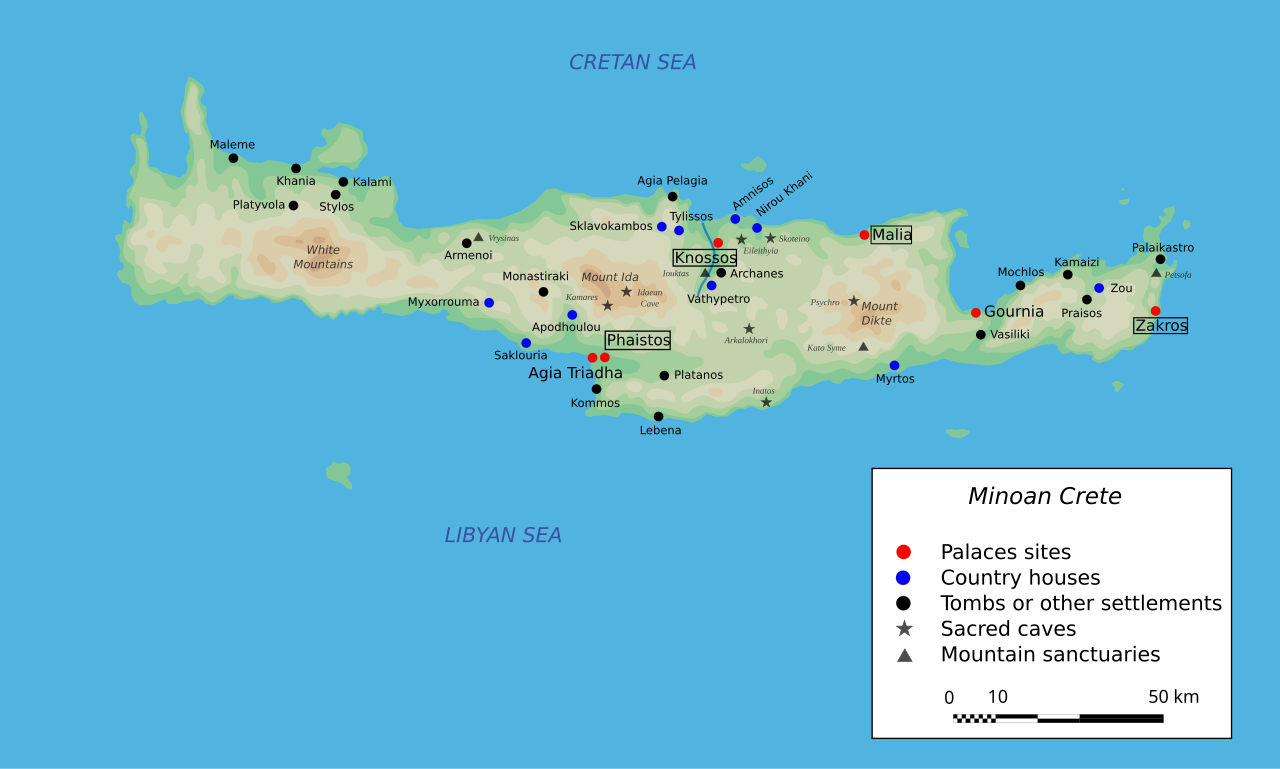
The most compelling sites to witness the grandeur of the Minoans are found on Crete. The Palace of Knossos, near modern Heraklion, is arguably the most famous, a sprawling complex with multi-story buildings, advanced plumbing, and stunning frescoes depicting bulls, dolphins, and ceremonial processions. Equally significant is the Palace of Phaistos, offering a different architectural perspective and renowned for its discovery of the enigmatic Phaistos Disc. Smaller, yet vital, sites like Malia and Zakros provide further insights into Minoan life and administration, each offering a distinct glimpse into this remarkable Bronze Age culture.
🏺 Key Artifacts and Artistry
Minoan artistry is unparalleled, characterized by its dynamic naturalism and vibrant use of color. Frescoes adorning palace walls, such as the 'Bull-Leaping' fresco at Knossos, showcase athletic figures and a deep connection to the natural world. Their pottery, particularly the Kamares ware with its swirling, abstract designs, demonstrates exceptional craftsmanship and aesthetic sensibility. Bronze tools, intricate gold jewelry, and the famous Phaistos Disc, inscribed with unknown hieroglyphic symbols, are further examples of their sophisticated material culture. These artifacts are not mere decorations; they are narrative fragments of a complex society.
📜 Understanding Minoan Society
Minoan society appears to have been highly organized, centered around powerful palatial centers that served as administrative, economic, and religious hubs. While definitive understanding remains elusive due to the undeciphered Linear A script, archaeological evidence points to a hierarchical structure, likely with a ruling elite. The prominent role of women in frescoes and religious iconography suggests a society where females held significant status, a notable contrast to many ancient patriarchal cultures. Their economy was heavily reliant on maritime trade, exchanging goods like olive oil, wine, pottery, and textiles across the Mediterranean.
⚔️ Minoan Military and Defense
Contrary to the militaristic societies common in the ancient world, the Minoans exhibit surprisingly little evidence of extensive fortifications or weaponry. Their primary defense appears to have been their formidable navy, which controlled trade routes throughout the Aegean. While some defensive structures exist, they are less pronounced than those found at contemporary mainland sites. This suggests a period of relative peace and security, perhaps due to their naval dominance and diplomatic relations, allowing their culture to flourish artistically and economically without constant threat of invasion.
📉 The Decline and Legacy
The decline of the Minoan civilization around 1450 BCE is a subject of ongoing debate, with theories ranging from the catastrophic eruption of the Thera volcano to invasion by the Mycenaeans. While the Thera eruption likely caused significant disruption, the subsequent Mycenaean takeover, evidenced by the presence of Linear B script at Knossos, marks a clear transition. Despite their eventual assimilation, the Minoan legacy endured, profoundly influencing the subsequent Mycenaean civilization and laying crucial groundwork for the development of classical Greek culture. Their artistic motifs and architectural innovations echoed for centuries.
💡 Fascinating Minoan Facts
Did you know the Minoans were among the first to develop a sophisticated sewage and drainage system in their palaces? The 'Grand Staircase' at Knossos is a marvel of ancient engineering. The Minoans also revered the bull, featuring it prominently in their art and possibly in religious rituals, leading to myths like the Minotaur. Their script, Linear A, remains undeciphered, holding secrets about their language and history. The sheer scale of their palaces, like Knossos covering over 20,000 square meters, is astonishing for the Bronze Age.
🗺️ Planning Your Minoan Journey
To fully appreciate the Minoan Civilization, a visit to Crete is essential. Start by exploring the Palace of Knossos and the Heraklion Archaeological Museum, which houses an unparalleled collection of Minoan artifacts. Consider visiting Phaistos and Gortyna for a broader understanding of Cretan history. Allow at least two to three days to explore the main sites on the island. For those unable to travel, numerous books and documentaries offer deep dives into Minoan culture, and virtual tours of archaeological sites are increasingly available online.
Key Facts
- Year
- c. 2700 – 1450 BCE
- Origin
- Crete
- Category
- Ancient History
- Type
- Civilization
Frequently Asked Questions
What is the most famous Minoan site?
The most famous and extensive Minoan site is the Palace of Knossos on Crete. It's a vast complex renowned for its intricate architecture, multi-story structures, advanced plumbing, and vibrant frescoes, offering a comprehensive look into Minoan life and culture.
What happened to the Minoan Civilization?
The exact reasons for the decline of the Minoan Civilization around 1450 BCE are debated. Major theories include the catastrophic Thera volcano eruption causing widespread destruction and tsunamis, and invasion and conquest by the Mycenaean Civilization from mainland Greece. It's likely a combination of factors led to their downfall.
Can we read Minoan writing?
No, the primary Minoan script, known as Linear A, remains undeciphered. While scholars have identified some syllabic values, the language itself is unknown, making it impossible to fully understand their written records. The later Linear B script, found on Crete, is an early form of Greek and was deciphered.
What kind of art did the Minoans create?
Minoan art is characterized by its vibrant colors, dynamic movement, and naturalistic depictions. Famous examples include frescoes of bull-leaping, marine life like dolphins and octopuses, and elegant pottery with swirling designs (Kamares ware). They also excelled in creating intricate gold jewelry and bronze work.
Was Minoan society peaceful?
Archaeological evidence suggests the Minoans were relatively peaceful compared to other Bronze Age cultures. They lacked extensive fortifications and large quantities of weaponry. Their power and security likely stemmed from a dominant navy that controlled trade routes across the Aegean Sea.
Where can I see Minoan artifacts?
The best place to see a comprehensive collection of Minoan artifacts is the Heraklion Archaeological Museum on Crete. Many significant finds from Knossos, Phaistos, and other sites are housed there. Other museums worldwide may have select pieces, but Crete is the primary location.