
Contents
Overview
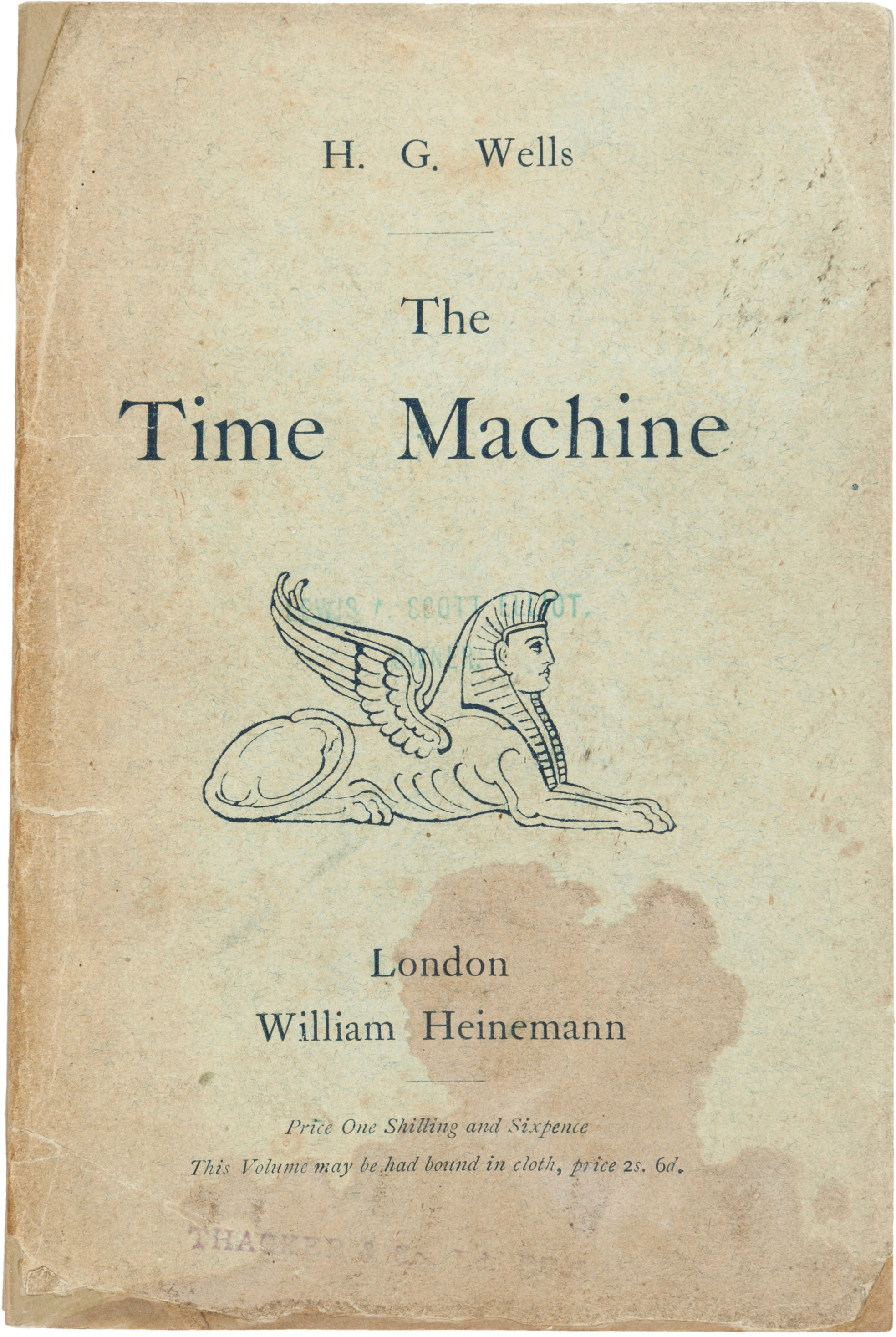
Time travel, the theoretical concept of moving between different points in time, remains a cornerstone of speculative fiction and a persistent fascination in physics. While forward time travel is a demonstrable consequence of Einstein's theories of relativity, allowing for minuscule temporal shifts through high speeds or strong gravitational fields, backward time travel presents profound challenges, particularly concerning causality and paradoxes. The idea has been popularized by seminal works like H.G. Wells's The Time Machine, which introduced the iconic time machine device. Physicists continue to explore theoretical frameworks, such as wormholes and closed timelike curves, that might permit such journeys, though practical realization remains firmly in the realm of hypothesis and imagination. The debate over its possibility touches upon the fundamental nature of time, causality, and the very fabric of the universe.
🎵 Origins & History
The concept of traversing time, both forward and backward, has roots stretching back to ancient myths and philosophical musings. Early literary explorations hinted at temporal displacement, but it was H.G. Wells's novel, The Time Machine, that cemented the idea of a mechanical device for temporal journeys in the popular consciousness. Wells's narrative ignited imaginations about the potential for humanity to witness epochs far beyond its own lifespan. Prior to Wells, writers had also explored similar themes, though Wells's work achieved far greater global recognition and influence, setting the stage for countless subsequent fictional explorations.
⚙️ How It Works
From a physics perspective, forward time travel is a well-established phenomenon, albeit on a minuscule scale, predicted by Albert Einstein's theories of special relativity and general relativity. Special relativity posits that time dilates for an object as its speed approaches the speed of light; the faster you move, the slower time passes for you relative to a stationary observer. General relativity suggests that time also slows down in stronger gravitational fields. For instance, a clock on a satellite orbiting Earth runs slightly faster than a clock on the ground due to weaker gravity, a difference accounted for in GPS systems. Backward time travel, however, is far more speculative, with theoretical possibilities arising from solutions to Einstein's field equations, such as those involving wormholes or closed timelike curves, which are hypothetical paths through spacetime that could loop back on themselves.
📊 Key Facts & Numbers
While practical, large-scale time travel remains theoretical, the effects predicted by relativity are quantifiable. For example, astronauts on the International Space Station have experienced time dilation. Atomic clocks flown on airplanes have demonstrated time differences of nanoseconds compared to ground-based clocks, confirming relativistic effects. The energy requirements for near-light-speed travel, a prerequisite for significant forward time dilation, are astronomical. Theoretical models for backward time travel often involve exotic matter with negative mass-energy density, which has never been observed in nature, or manipulating spacetime curvature to an extent far beyond any current or foreseeable technological capability.
👥 Key People & Organizations
Key figures in the theoretical exploration of time travel include Kurt Gödel, who in 1949 published a solution to Einstein's field equations that described a rotating universe allowing for closed timelike curves. Frank Tipler proposed that a massive, rapidly rotating cylinder could also create such curves. In the realm of science fiction, H.G. Wells is paramount for popularizing the concept with his novel. More recently, physicists like Kip Thorne have explored the theoretical feasibility of wormholes for time travel, often in collaboration with filmmakers like Christopher Nolan for films such as Interstellar. Organizations like NASA and various university physics departments continue to conduct research into the fundamental nature of spacetime, indirectly contributing to our understanding of temporal mechanics.
🌍 Cultural Impact & Influence
Time travel has profoundly shaped the science fiction genre, birthing subgenres and inspiring countless narratives across literature, film, and television. Works like Back to the Future, Doctor Who, and The Terminator franchise have ingrained the concept into global popular culture, often exploring the ethical dilemmas and paradoxes associated with altering the past. The trope has also influenced philosophical discussions on free will versus determinism, causality, and the nature of identity. Beyond fiction, the theoretical exploration of time travel has spurred public interest in physics and cosmology, fostering a broader engagement with complex scientific ideas through accessible storytelling and imaginative concepts.
⚡ Current State & Latest Developments
Current research into time travel primarily resides within theoretical physics and cosmology. While no experimental evidence for backward time travel exists, physicists continue to investigate the implications of quantum mechanics and general relativity for temporal phenomena. Concepts like quantum entanglement and the possibility of manipulating spacetime at the Planck scale are areas of active theoretical study. The development of more sensitive gravitational wave detectors, such as Virgo and LIGO, may one day offer new insights into extreme gravitational environments that could theoretically be linked to temporal distortions. However, any tangible steps towards engineering a time machine remain speculative, with current efforts focused on understanding the fundamental laws governing time itself.
🤔 Controversies & Debates
The most significant controversy surrounding time travel, particularly backward time travel, is the grandfather paradox. This paradox questions what would happen if a traveler went back in time and prevented their own grandparents from meeting, thus preventing their own birth, which would then make it impossible for them to travel back in time in the first place. Physicists propose potential resolutions, such as Novikov's self-consistency principle, which suggests that the laws of physics would prevent paradoxes from occurring, ensuring that any actions taken by a time traveler were already part of history. Other debates revolve around the philosophical implications of determinism versus free will, and whether a multiverse interpretation, where each temporal alteration creates a new parallel universe, is a necessary consequence of backward time travel.
🔮 Future Outlook & Predictions
The future outlook for time travel remains firmly in the speculative domain. While forward time travel is a proven, albeit minuscule, effect of relativity, achieving significant temporal leaps would require technologies far beyond our current capabilities, such as achieving near-light speeds or harnessing immense gravitational forces. For backward time travel, the theoretical hurdles, including the need for exotic matter and the resolution of paradoxes, are substantial. Some futurists envision that advancements in quantum computing and a deeper understanding of quantum gravity might eventually unlock new possibilities, but most predictions place practical backward time travel centuries, if not millennia, into the future, if it is possible at all.
💡 Practical Applications
While direct time travel to the past or future is not currently feasible, the principles underlying its theoretical possibility have practical applications. The understanding of time dilation from special relativity is crucial for the accuracy of GPS systems, which must account for the slight differences in time experienced by satellites in orbit and receivers on the ground. Research into extreme gravitational environments, theoretically linked to temporal distortions, also informs fields like astrophysics and cosmology, aiding in the study of phenomena such as black holes and neutron stars. Furthermore, the conceptual exploration of time travel continues to drive innovation in computational physics and theoretical modeling, pushing the boundaries of our understanding of spacetime.
Key Facts
- Category
- science
- Type
- topic