
Contents
Overview
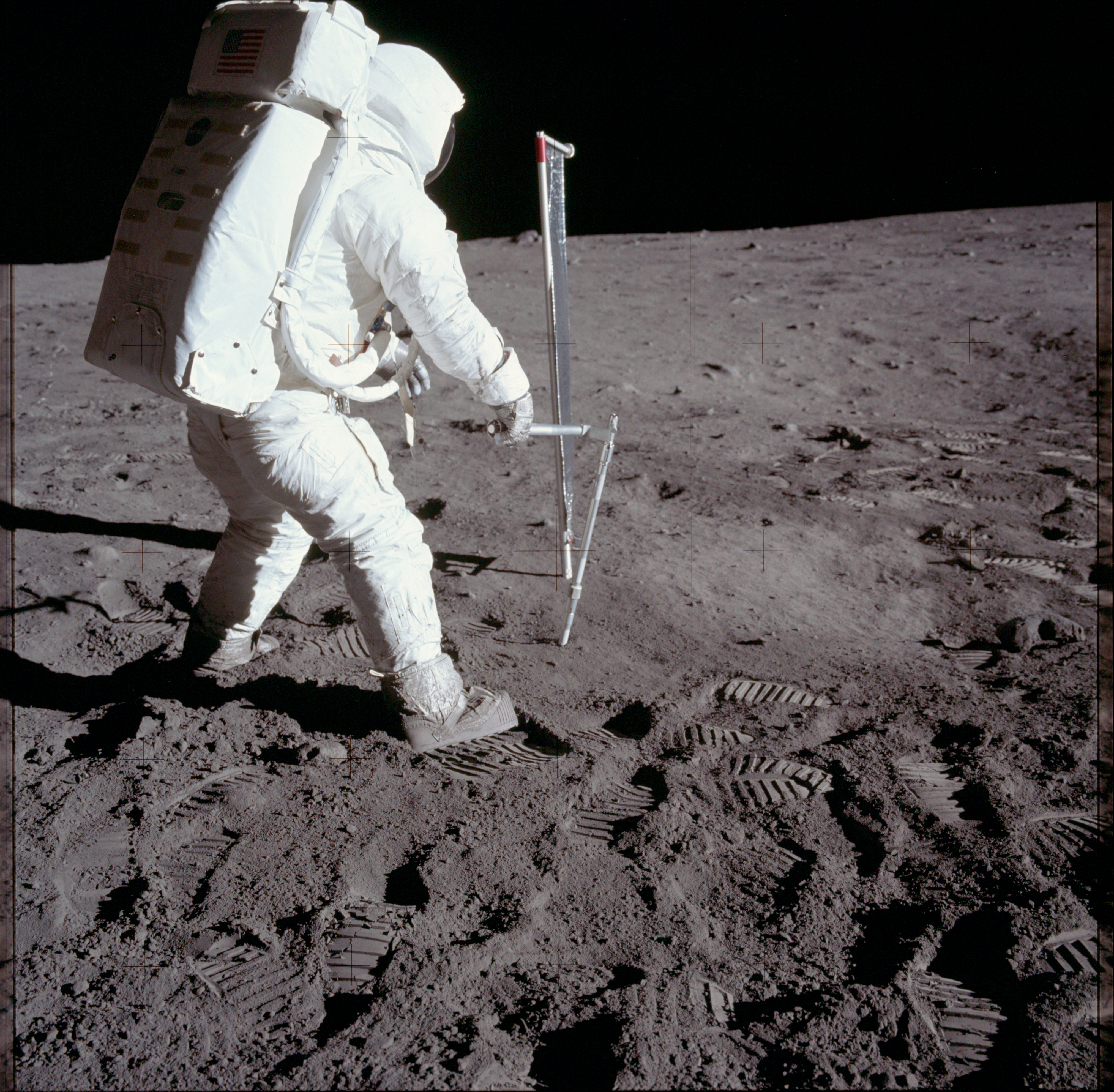
The genesis of space exploration is inextricably linked to the development of rocketry, a technology that saw significant theoretical and practical leaps during the first half of the 20th century. Visionaries like Robert Goddard in the United States, Konstantin Tsiolkovsky in Russia, and Hermann Oberth in Germany laid the foundational principles for liquid-fueled rockets. However, it was the intense geopolitical rivalry of the Cold War that truly ignited the era of space exploration. The Soviet Union's launch of Sputnik 1 on October 4, 1957, a mere 83.6 kg (184 lb) satellite, shocked the world and initiated the 'Space Race' against the United States. This competition spurred rapid advancements, leading to the first human in orbit, Yuri Gagarin, in 1961, and culminating in the Apollo 11 mission's lunar landing on July 20, 1969, a monumental achievement for NASA and humanity.
⚙️ How It Works
At its core, space exploration relies on sophisticated rocketry to overcome Earth's gravity and achieve orbital velocity or escape velocity. Rockets, typically multi-stage, burn propellant to generate immense thrust, accelerating payloads like satellites, probes, and crewed spacecraft. Once in space, navigation and propulsion systems, ranging from chemical thrusters to ion engines, are used for trajectory adjustments and maneuvering. Robotic probes, equipped with scientific instruments like cameras, spectrometers, and magnetometers, transmit data back to Earth via deep space networks, such as NASA's Jet Propulsion Laboratory's Deep Space Network. Human spaceflight involves complex life support systems, radiation shielding, and robust reentry vehicles, all managed from mission control centers like Houston's Mission Control Center.
📊 Key Facts & Numbers
The scale of space exploration is staggering. Over 6,000 satellites have been launched into Earth orbit since 1957, with more than 2,000 currently active. As of 2024, over 700 individuals have journeyed into space, with the majority reaching low Earth orbit. The International Space Station (ISS), a collaborative project involving 15 countries, has been continuously inhabited since November 2, 2000, spanning over 23 years. Missions have sent probes to every planet in our solar system, with Voyager 1 being the first human-made object to enter interstellar space in August 2017, over 14 billion miles from Earth. The global space economy was valued at approximately $469 billion in 2021 and is projected to grow significantly.
👥 Key People & Organizations
Key figures in space exploration span scientists, engineers, astronauts, and political leaders. Wernher von Braun, a pivotal figure in rocket development, transitioned from Nazi Germany to lead NASA's Marshall Space Flight Center and the Saturn V rocket program. Sergei Korolev was the chief designer behind the Soviet space program, responsible for Sputnik and Gagarin's flight. Astronauts like Neil Armstrong and Buzz Aldrin became global icons after the Apollo 11 landing. Today, entrepreneurs like elon-musk with SpaceX and jeff-bezos with Blue Origin are driving a new era of commercial spaceflight and ambitious exploration goals, often challenging established government agencies like ESA and Roscosmos.
🌍 Cultural Impact & Influence
Space exploration has profoundly shaped global culture, inspiring art, literature, film, and music. The 'Space Age' fostered a sense of wonder and possibility, influencing design aesthetics and technological aspirations. The iconic images from space, such as the 'Earthrise' photograph taken during the Apollo 8 mission, have galvanized environmental awareness. Furthermore, the collaborative nature of projects like the ISS has fostered international goodwill and demonstrated the potential for global cooperation on complex scientific endeavors. The pursuit of space has also fueled countless technological spin-offs, from GPS navigation to advanced medical imaging, impacting daily life in unforeseen ways.
⚡ Current State & Latest Developments
The current landscape of space exploration is characterized by a surge in commercial activity and a renewed focus on lunar and Martian exploration. SpaceX's Starship program aims for rapid, reusable interplanetary transport, while NASA's Artemis Program seeks to establish a sustainable human presence on the Moon as a stepping stone to Mars. Private companies are developing lunar landers, space tourism ventures are gaining traction, and constellations of small satellites for communication and Earth observation, like Starlink, are being deployed. International collaborations continue, with nations like China making significant strides in lunar and robotic Mars exploration through programs like Chang'e and Tianwen-1.
🤔 Controversies & Debates
Significant debates surround space exploration, primarily concerning cost versus benefit. Critics question the immense financial investment, arguing that funds could be better allocated to address terrestrial issues like poverty, climate change, and disease. The militarization of space is another major concern, with nations developing anti-satellite weapons and vying for strategic dominance. Ethical considerations regarding planetary protection—preventing contamination of other celestial bodies with Earth microbes and vice versa—are also paramount. The long-term sustainability of space activities, including the growing problem of space debris, presents a pressing challenge for future exploration.
🔮 Future Outlook & Predictions
The future of space exploration points towards increased privatization, deeper robotic exploration, and potentially long-term human settlements. NASA's Artemis Program aims for regular crewed missions to the Moon by the mid-2020s, potentially establishing a lunar base. Mars remains a long-term goal, with missions like SpaceX's ambitious plans for human colonization within the next few decades. Robotic missions will continue to push boundaries, exploring ocean worlds like Europa and Enceladus for signs of life, and venturing further into the outer solar system and beyond. The development of advanced propulsion systems, such as nuclear thermal or fusion rockets, could drastically reduce travel times, opening up new frontiers.
💡 Practical Applications
While often perceived as purely scientific, space exploration yields numerous practical applications. Satellite technology underpins global communication, weather forecasting, navigation systems like GPS, and Earth observation for resource management and disaster response. Materials developed for spacecraft, such as advanced alloys and insulation, have found uses in terrestrial industries. Medical research conducted in microgravity aboard the ISS provides insights into bone density loss, muscle atrophy, and other physiological processes relevant to aging and disease. Water purification systems and remote sensing technologies developed for space missions have also been adapted for use in developing regions.
Key Facts
- Category
- science
- Type
- topic