
Contents
- 🎵 Origins & Sensory History
- ⚙️ How the Sensory Shift Worked
- 📊 Key Facts & Numbers
- 👥 Key Figures of the Transition
- 🌍 Cultural Impact & Sensory Influence
- ⚡ Current State & Modern Vibrations
- 🤔 Controversies & Sensory Debates
- 🔮 Future Outlook & Predictions
- 💡 Practical Applications in Sensory Design
- 📚 Related Topics & Deeper Reading
- References
Overview
Beyond the political overthrow of the Shah Mohammad Reza Pahlavi, the movement fundamentally recalibrated the sights, sounds, and tactile experiences of Iranian daily life. From the high-gloss, Westernized aesthetics of the White Revolution to the austere, spiritually-focused sensory regime of Ayatollah Khomeini, the revolution was as much a battle over the human senses as it was over governance. This transition replaced the 'sensory overload' of rapid industrialization and globalist fashion with a structured, rhythmic environment defined by communal prayer, revolutionary murals, and the rejection of 'Westoxification' (Gharbzadegi). Today, the legacy of 1979 continues to shape how millions of people navigate public and private spaces, balancing traditional sensory seeking with modern digital connectivity.
🎵 Origins & Sensory History
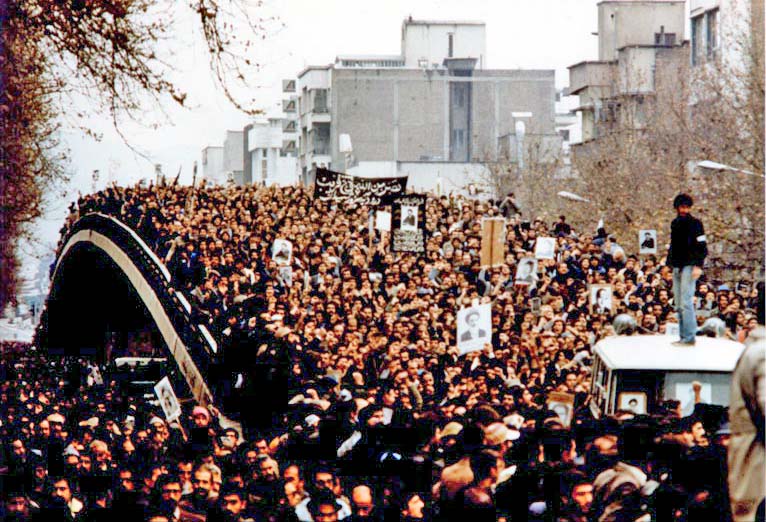
The origins of the revolution lie in a clash between two competing sensory worlds: the secular-modernist and the traditional-religious. Under the Pahlavi Dynasty, Iran underwent a rapid 'sensory modernization' that introduced Western cinema, jazz, and French fashion, which many felt was an assault on local identity. The opposition utilized the sensory power of the Mosque, using the rhythmic chanting of sermons and the tactile distribution of cassette tapes to bypass state media. By the late 1970s, the tension between these two modes of living reached a breaking point, leading to the massive street protests of 1978.
⚙️ How the Sensory Shift Worked
The revolution functioned by systematically dismantling the sensory markers of the previous regime and replacing them with a new symbolic order. Public spaces were stripped of Western advertisements and replaced with massive Revolutionary Murals depicting martyrs and spiritual leaders. The auditory environment was transformed through the banning of most Western music, replaced by the call to prayer and revolutionary anthems that emphasized collective identity over individual sensory seeking. The mandatory Hijab altered the tactile and visual experience of the public square, creating a uniform sensory 'texture' for the nation. This was not merely a legal change but a deliberate attempt to curate the sensory inputs of the citizenry to align with Islamic values.
📊 Key Facts & Numbers
The scale of the revolution's impact is reflected in staggering data points from the 1979 era. The subsequent Iran-Iraq War (1980-1988) further solidified this sensory regime, as the state produced thousands of hours of media focused on the 'sensory experience of martyrdom.' Economic shifts were equally drastic, with the nationalization of industries affecting the availability of consumer goods for over 35 million citizens. Even today, the sensory regulations of the state affect the daily lives of nearly 88 million people living in Iran.
👥 Key Figures of the Transition
The revolution was driven by individuals who understood the power of sensory persuasion and control. Ayatollah Ruhollah Khomeini was the central figure, whose voice—distributed via low-fidelity cassettes—became the primary auditory stimulus for the resistance. Shah Mohammad Reza Pahlavi attempted to maintain a sensory image of 'The Great Civilization' through lavish events like the Persepolis Celebration. Intellectuals like Ali Shariati provided the ideological framework that framed Western sensory habits as a form of cultural 'intoxication.' In the aftermath, figures like Morteza Motahhari helped define the new educational and sensory standards for the post-revolutionary generation. These leaders recognized that to change a mind, one must first change what that mind perceives.
🌍 Cultural Impact & Sensory Influence
The cultural impact of 1979 redefined the global perception of Middle Eastern aesthetics and sensory norms. The revolution sparked a worldwide interest in Political Islam, which brought traditional Islamic sensory practices—such as the fast of Ramadan—into the global media spotlight. In the arts, the 'New Wave' of Iranian Cinema, led by directors like Abbas Kiarostami, emerged as a response to sensory restrictions, focusing on minimalism and poetic realism. This 'sensory of the subtle' became a hallmark of Iranian high culture, contrasting with the loud, commercialized sensory environments of the West. The revolution also influenced the Iranian Diaspora, creating vibrant sensory enclaves in cities like Los Angeles (Tehrangeles) that blend pre-revolutionary and post-revolutionary habits.
⚡ Current State & Modern Vibrations
In 2024 and 2025, the sensory landscape of Iran is undergoing a digital-led transformation that challenges the 1979 status quo. The rise of Social Media and VPNs has allowed younger Iranians to engage in 'digital sensory seeking,' accessing global trends that were once physically banned. Movements like Woman, Life, Freedom (2022) have used sensory symbols—such as the cutting of hair or the burning of headscarves—to protest the state's sensory regulations. The government has responded with 'smart' surveillance technologies, creating a high-tech sensory net of facial recognition and internet shutdowns. Despite these tensions, the traditional sensory markers of the revolution, such as the annual Fajr Festival, remain central to the state's cultural calendar. The current state is a volatile mix of 20th-century revolutionary austerity and 21st-century hyper-connectivity.
🤔 Controversies & Sensory Debates
The primary controversy surrounding the revolution involves the trade-off between communal spiritual identity and individual sensory freedom. Critics argue that the state's enforcement of sensory norms constitutes a violation of Human Rights, particularly regarding the bodily autonomy of women. Proponents of the system argue that these regulations protect society from the 'sensory pollution' of consumerism and maintain a unique cultural ecosystem. There is also a deep debate over the 'sensory history' of the revolution itself, with different factions contesting the memory of the events of 1979. The use of Censorship to limit sensory inputs—from banning satellite dishes to filtering the internet—remains the most polarized topic in Iranian society. These debates are not just political; they are fundamental disagreements about how a human being should experience the world.
🔮 Future Outlook & Predictions
The future of Iran's sensory environment likely involves a gradual 'sensory liberalization' driven by generational shifts and technological inevitability. Experts predict that by 2030, the strict visual and auditory codes of the 1979 era will face increasing pressure to adapt to a more pluralistic society. The growth of the Creative Economy in Tehran suggests a move toward a 'Neo-Iranian' aesthetic that blends revolutionary history with modern sensory design. However, the state is also investing in Sovereign Internet projects to maintain sensory control in the digital realm. The outcome will depend on whether the next generation of leaders chooses to maintain the 'sensory walls' of the revolution or open the nation to a new era of global sensory exchange. This evolution will be a key indicator of the revolution's long-term survival.
💡 Practical Applications in Sensory Design
Understanding the Iranian Revolution offers practical insights into how sensory environments can be used for social engineering and community building. Urban planners can study the use of Public Squares like Azadi Square to understand how physical space facilitates collective sensory experiences. Educators can look at the post-1979 Cultural Revolution to see how curriculum changes affect the sensory development of children. For those interested in Sensory Processing, the Iranian experience provides a case study in how a sudden change in environmental stimuli can impact a population's mental health and social behavior. Designers can also find inspiration in the way Iranian artists navigate restrictions to create deeply evocative, sensory-rich works within a limited palette. These applications extend far beyond politics into the realms of psychology, architecture, and art.
Key Facts
- Category
- history
- Type
- topic