
Contents
Overview
Drug discovery is the complex, multi-stage process by which new potential medications are identified and developed. It begins with understanding disease mechanisms and identifying biological targets, then screening vast libraries of chemical compounds to find 'hits' that interact with these targets. These hits are then optimized through medicinal chemistry to improve efficacy, safety, and pharmacokinetic properties, leading to candidate drugs. This rigorous process, often spanning over a decade and costing billions, involves extensive preclinical testing in labs and animal models before advancing to human clinical trials. The ultimate goal is to bring safe and effective treatments to patients, addressing unmet medical needs across a spectrum of diseases.
🎵 Origins & History
The quest to find remedies for illness is as old as humanity itself, with early 'drug discovery' rooted in traditional medicine and folk remedies. The mid-20th century saw the rise of synthetic chemistry and the establishment of pharmaceutical giants like Pfizer and Merck, who began systematically screening chemical compounds, laying the groundwork for modern drug discovery pipelines.
⚙️ How It Works
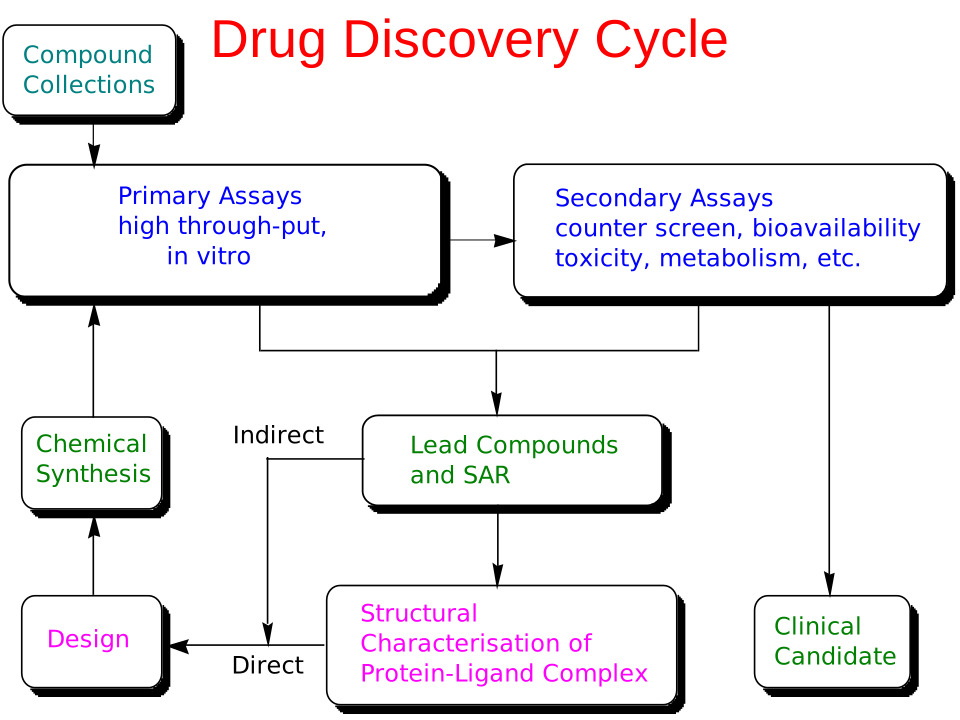
Modern drug discovery is a highly systematic process, often beginning with target identification, where researchers pinpoint a specific molecule (like a protein or enzyme) implicated in a disease. This is followed by high-throughput screening (HTS), where automated systems test millions of compounds from chemical libraries against the target. Promising 'hits' are then subjected to medicinal chemistry to optimize their structure, improving potency and reducing toxicity, a process known as lead optimization. These optimized compounds then undergo extensive preclinical testing, including in vitro cell-based assays and in vivo studies in animal models, to assess safety and efficacy before they can be considered for human trials. Companies like Biogen and Gilead Sciences employ vast teams of chemists, biologists, and pharmacologists to navigate these complex stages.
📊 Key Facts & Numbers
Numerous individuals and organizations have shaped the field. James Black developed propranolol and omeprazole by rationally designing drugs to block specific receptors. Major pharmaceutical players like Novartis, Roche, and AstraZeneca invest billions annually in R&D. Academic institutions, such as Harvard University and Stanford University, are crucial hubs for fundamental research that often seeds new drug discovery programs.
👥 Key People & Organizations
The impact of drug discovery on global health and society is profound, dramatically increasing life expectancy and improving quality of life. Breakthroughs in areas like oncology have transformed previously fatal diagnoses into manageable conditions for many. However, the high cost of new drugs also raises significant ethical and accessibility debates, influencing public health policy and patient advocacy movements worldwide. The success of companies like Moderna with mRNA vaccine technology has also spurred new cultural narratives around rapid scientific innovation.
🌍 Cultural Impact & Influence
The current landscape of drug discovery is heavily influenced by advancements in artificial intelligence and machine learning. Companies like Redwood AI Corp. are developing AI models to predict molecular interactions and optimize compound design, potentially accelerating the process. There's also a growing focus on personalized medicine, tailoring treatments to an individual's genetic makeup, with companies like Celcuity developing trials based on patient-specific cellular responses.
⚡ Current State & Latest Developments
Significant controversies surround drug discovery, primarily concerning the exorbitant cost of new medications and the perceived imbalance between R&D investment and patient affordability. Critics argue that pharmaceutical companies prioritize profitable lifestyle drugs over treatments for rare diseases or neglected tropical illnesses. The patent system, while incentivizing innovation, also leads to monopolies that can keep prices high. Ethical debates also arise regarding the use of animal testing in preclinical studies, with ongoing efforts to develop and validate alternative methods. The influence of Big Pharma on regulatory bodies and political lobbying is another persistent point of contention, as seen in debates surrounding drug pricing legislation.
🤔 Controversies & Debates
The future of drug discovery is reportedly poised for further acceleration, driven by AI, big data analytics, and a deeper understanding of complex biological systems. We can expect more targeted therapies, including personalized medicine and gene therapies, becoming mainstream. The integration of real-world evidence (RWE) into R&D processes will likely streamline clinical trials. The development of novel drug modalities beyond small molecules and biologics is also anticipated. Furthermore, increased collaboration between academia, industry, and government agencies, perhaps modeled after the rapid response seen during the pandemic, could tackle global health challenges more effectively.
🔮 Future Outlook & Predictions
Drug discovery's practical applications are vast, forming the bedrock of modern medicine. It yields treatments for everything from common ailments like headaches (e.g., aspirin) to life-threatening diseases such as cancer (e.g., imatinib) and HIV/AIDS (e.g., zidovudine). The process is essential for developing new antibiotics to combat rising antimicrobial resistance, creating antiviral medications, and designing therapies for neurological disorders like Alzheimer's disease. Every prescription medication available in pharmacies, from over-the-counter remedies to complex biologics, is a product of this intricate discovery and development pipeline.
💡 Practical Applications
The field of drug discovery is deeply intertwined with numerous scientific disciplines and technological advancements. Understanding its nuances requires exploring pharmacology, the study of drug action; biochemistry, which elucidates molecular mechanisms; and genomics, providing insights into genetic predispositions to disease. Related technological areas include bioinformatics for data analysis, synthetic biology for novel molecule design, and clinical trials management. Further reading on the history of specific drug classes, such as antibiotics or vaccines, offers deeper context on the impact of successful discovery efforts.
Key Facts
- Category
- science
- Type
- topic