
Contents
Overview
Corn, scientifically known as Zea mays, is a foundational cereal grain that stands as a cornerstone of global agriculture and cuisine. While often referred to simply as 'corn' in North America, its broader identity as maize connects it to a rich history of cultivation and consumption. This versatile grass is not just a food source but also a vital industrial commodity, underpinning everything from animal feed to biofuels. Understanding corn means appreciating its journey from ancient fields to modern industrial complexes, a narrative woven through human civilization.
📍 Origins and Domestication
The story of corn begins in southern Mexico, where indigenous peoples first domesticated wild teosinte approximately 9,000 years ago. This ancient agricultural innovation was revolutionary, providing a reliable and calorie-dense food source that supported the growth of complex societies. Early cultivators recognized its potential, integrating it into sophisticated farming systems like the Three Sisters polyculture, planting it alongside beans and squash to create a mutually beneficial ecosystem that nourished both the land and the people.
🌱 The Plant Itself
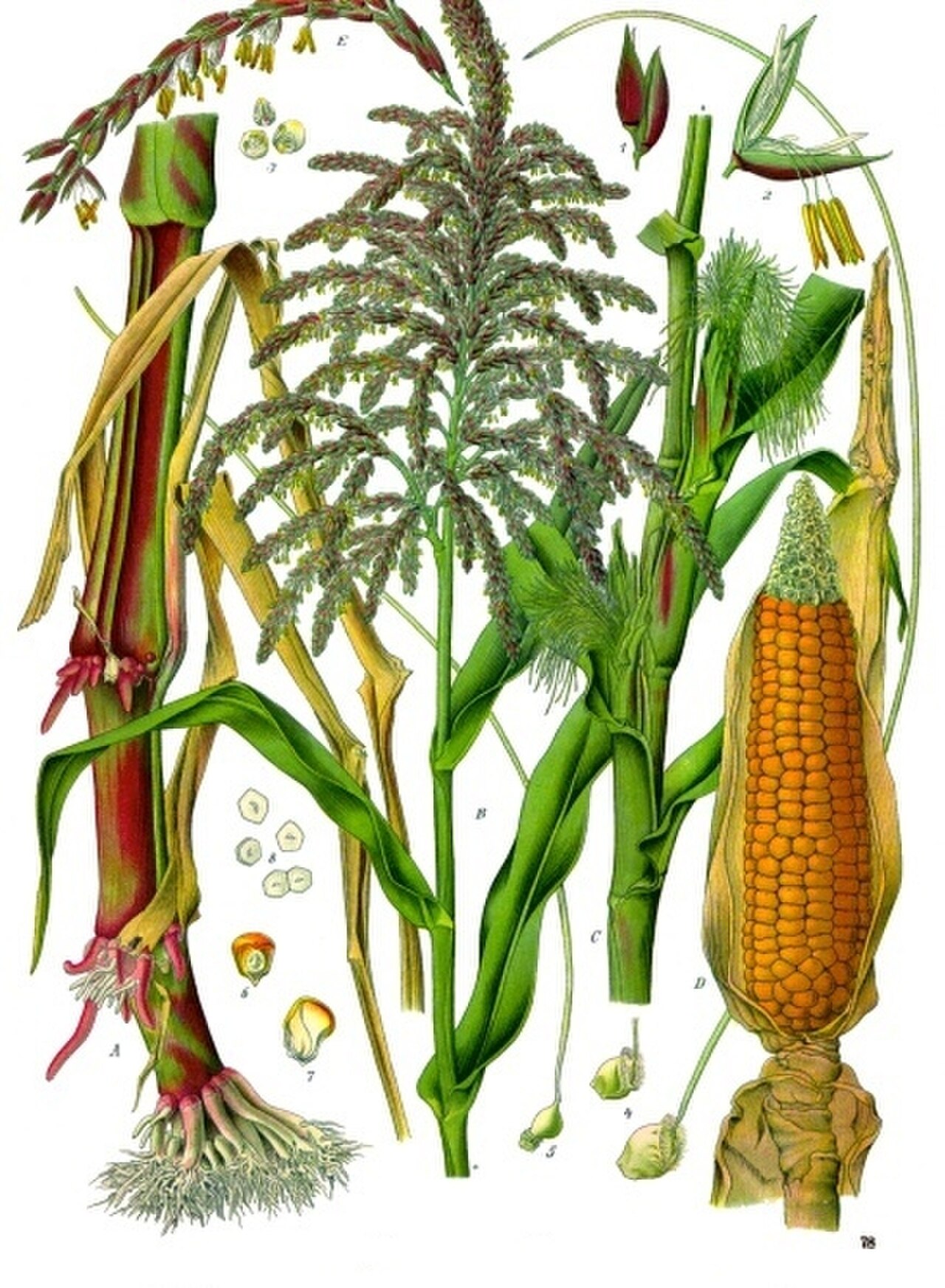
The corn plant is a remarkable specimen of the grass family, characterized by its tall, sturdy stalk that can reach impressive heights. Its life cycle culminates in the production of two key floral structures: the male tassel at the top, responsible for pollen dispersal, and the female ear lower down, which develops into the familiar cob lined with kernels. The leafy stalk provides essential nutrients and structure, supporting the development of these reproductive organs that ultimately yield the grain.
🌾 Varieties and Colors
While yellow and white kernels are most common in modern commercial varieties, the genetic diversity of corn is far more extensive. Throughout history and across different regions, corn has been cultivated in a dazzling array of colors, including deep reds, blues, purples, and even black. These vibrant hues often indicate different antioxidant profiles and are characteristic of heirloom and indigenous varieties, each telling a story of specific environmental adaptations and cultural preferences.
🍽️ Culinary Uses
Corn's culinary applications are as diverse as its appearance, appearing in countless dishes worldwide. From the simple pleasure of corn on the cob and creamy grits to its role as a key ingredient in tortillas, cornbread, and popcorn, its adaptability is unparalleled. Beyond direct consumption, corn is processed into high-fructose corn syrup, corn starch, and corn oil, making it an indispensable component in processed foods and beverages.
🌍 Global Significance
Globally, corn ranks among the most important cereal crops, rivaling wheat and rice in production volume and economic impact. Its cultivation spans continents, feeding billions of people and supporting vast livestock industries. The sheer scale of corn production influences global food security, commodity markets, and even geopolitical dynamics, underscoring its critical role in the modern world economy.
🚜 Modern Cultivation
Modern corn cultivation is a highly industrialized process, often involving large-scale monoculture farming. Advances in genetics and agronomy have led to high-yield varieties, but this intensification also raises questions about sustainability, biodiversity, and the environmental impact of practices like heavy fertilizer use and pesticide application.
💡 Interesting Facts
Did you know that a single corn cob can have up to 1,000 kernels, with each kernel representing a single seed? Furthermore, corn is not just a food crop; it's a versatile industrial material used in the production of ethanol, plastics, and even pharmaceuticals. The sheer range of applications highlights the extraordinary utility of this ancient grain, a testament to its enduring value.
Key Facts
- Year
- -7000
- Origin
- Mesoamerica
- Category
- Agriculture & Food
- Type
- Crop
Frequently Asked Questions
What is the difference between corn and maize?
In North American English, 'corn' is the common term. However, 'maize' is the scientific and more widely used term globally, particularly outside of North America. Both refer to the same plant, Zea mays. The distinction is primarily linguistic and regional, with 'maize' often used in more formal or international contexts.
Where did corn originate?
Corn was first domesticated by indigenous peoples in southern Mexico approximately 9,000 years ago. It was developed from a wild grass known as teosinte. This domestication was a pivotal moment in human history, enabling settled agriculture and the development of complex societies across the Americas.
What are the 'Three Sisters'?
The 'Three Sisters' is a traditional indigenous agricultural practice involving the companion planting of corn (maize), beans, and squash. The corn provides a stalk for the beans to climb, the beans fix nitrogen in the soil benefiting all three plants, and the squash's broad leaves shade the ground, conserving moisture and suppressing weeds.
Why are there different colors of corn?
The color of corn kernels is determined by genetics and pigment content. Yellow and white are common due to specific carotenoids. Other colors like red, blue, purple, and black result from different types of pigments, such as anthocyanins, and are often found in heirloom varieties, indicating diverse genetic lineages and regional adaptations.
Is corn a grain or a vegetable?
Botanically, corn kernels are classified as cereal grains because they are the dry seeds of a grass plant. However, in culinary contexts, corn is often treated as a vegetable, especially when eaten fresh off the cob or as kernels in various dishes. This dual classification reflects its varied uses and cultural perceptions.
What are the main uses of corn today?
Today, corn serves multiple critical roles. A significant portion is used for animal feed, supporting livestock industries globally. It's also processed into corn syrup and corn starch for food manufacturing, used to produce ethanol for biofuel, and consumed directly as a food staple in many cultures. Industrial applications also include bioplastics and pharmaceuticals.