
Contents
- 🩺 What is AI in Healthcare?
- 💡 Key Applications & Use Cases
- 📈 Impact on Patients & Providers
- ⚙️ How AI Works in Medical Settings
- ⚖️ Ethical Considerations & Challenges
- 🚀 The Future of AI in Medicine
- ⭐ Where to Find AI Healthcare Solutions
- ✅ Getting Started with AI in Healthcare
- Frequently Asked Questions
- Related Topics
Overview
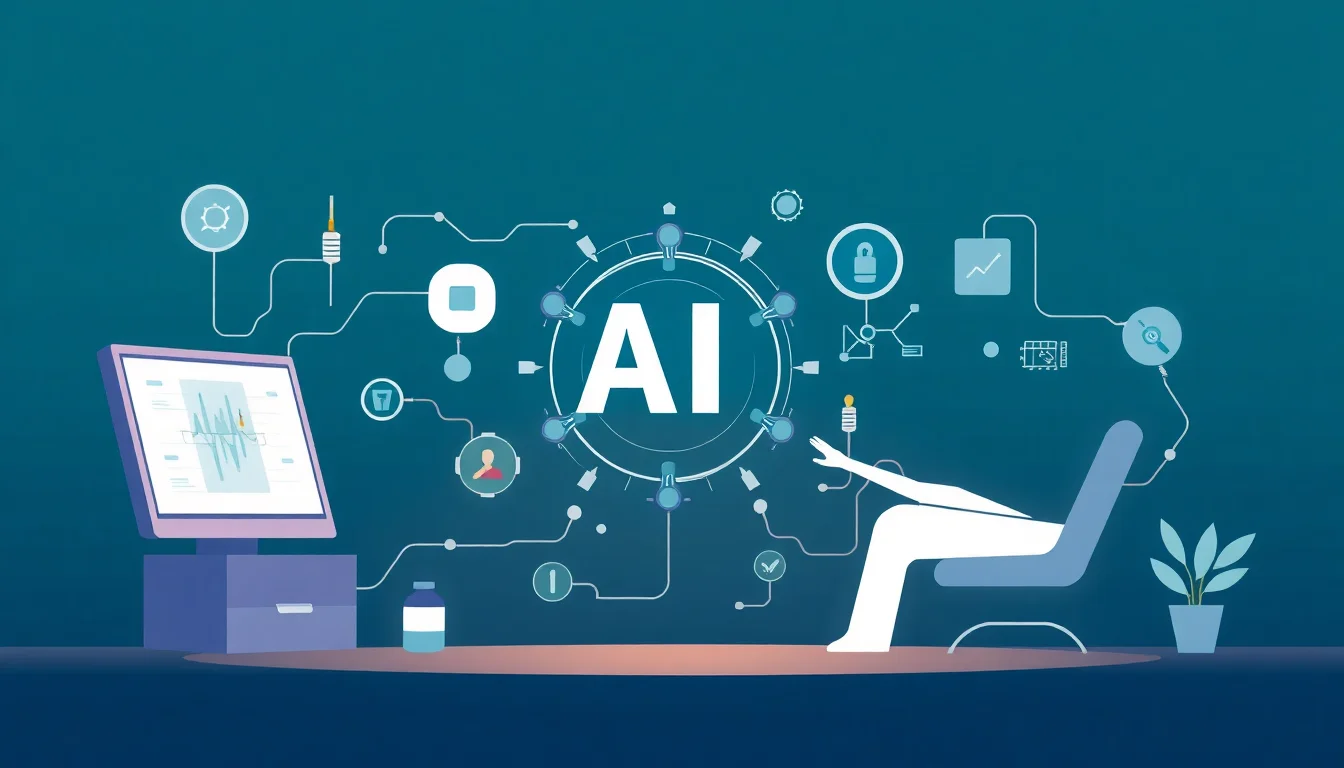
Artificial intelligence is rapidly reshaping the healthcare industry, moving beyond theoretical applications to tangible tools that enhance diagnostics, accelerate drug discovery, and personalize patient treatment. From sophisticated image analysis for radiology to predictive models for disease outbreaks, AI's integration promises greater efficiency and improved outcomes. However, challenges remain regarding data privacy, regulatory hurdles, and ensuring equitable access to these advanced technologies. The ongoing development and deployment of AI in healthcare signal a fundamental shift in how medical professionals operate and how patients receive care.
🩺 What is AI in Healthcare?
AI in Healthcare refers to the application of artificial intelligence technologies to medical research, diagnosis, treatment, and patient care. It's not about replacing human doctors but augmenting their capabilities with powerful analytical tools. This field is rapidly evolving, promising to transform how healthcare is delivered and experienced. The primary goal is to improve patient outcomes, increase efficiency, and reduce costs across the healthcare spectrum. Think of it as a sophisticated assistant that can process vast amounts of data far quicker than any human.
💡 Key Applications & Use Cases
The applications of AI in healthcare are diverse and expanding. Diagnostic imaging analysis is a prime example, where AI algorithms can detect subtle anomalies in X-rays, CT scans, and MRIs that might be missed by the human eye. Drug discovery and development is another area, with AI accelerating the identification of potential new therapies and predicting their efficacy. Personalized medicine leverages AI to tailor treatments based on an individual's genetic makeup, lifestyle, and environment. AI-powered virtual health assistants are also becoming common, offering preliminary symptom checks and appointment scheduling.
📈 Impact on Patients & Providers
For patients, AI promises more accurate diagnoses, faster treatment plans, and a more personalized healthcare journey. It can lead to earlier detection of diseases, potentially saving lives and reducing the burden of chronic conditions. For healthcare providers, AI tools can automate routine tasks, reduce burnout by handling administrative burdens, and provide decision support, allowing them to focus more on complex cases and direct patient interaction. This can lead to improved job satisfaction and a more efficient workflow within hospitals and clinics.
⚙️ How AI Works in Medical Settings
At its core, AI in healthcare relies on machine learning, a subset of AI where algorithms learn from data without explicit programming. Deep learning, a more advanced form of machine learning, uses neural networks with multiple layers to analyze complex patterns in data, such as medical images or genomic sequences. Natural Language Processing (NLP) enables AI systems to understand and process human language, crucial for analyzing clinical notes and patient records. Computer vision allows AI to 'see' and interpret visual information from medical scans.
⚖️ Ethical Considerations & Challenges
The integration of AI into healthcare raises significant ethical questions. Data privacy and security are paramount, as AI systems often require access to sensitive patient information. Algorithmic bias is another major concern, where AI models trained on unrepresentative data can perpetuate or even amplify existing health disparities. Ensuring transparency and explainability in AI decision-making is crucial for building trust among both patients and clinicians. Regulatory frameworks are still catching up to the pace of AI development.
🚀 The Future of AI in Medicine
The future of AI in healthcare is incredibly promising, with potential for even greater integration into daily medical practice. We can anticipate AI playing a larger role in predictive analytics for disease outbreaks and individual patient risk assessment. Robotic surgery enhanced by AI will offer greater precision and minimally invasive procedures. The development of AI-powered diagnostic tools that can operate remotely could significantly improve access to care in underserved areas. The ongoing advancements in AI are set to redefine the boundaries of medical possibility.
⭐ Where to Find AI Healthcare Solutions
Finding AI healthcare solutions can involve exploring specialized software vendors, hospital innovation departments, and academic research institutions. Companies like Google Health, IBM Watson Health, and Microsoft Healthcare are major players developing AI platforms and tools. Many startups are also emerging, focusing on niche areas like AI-driven radiology or personalized oncology. It's advisable to look for solutions that have undergone rigorous clinical validation and regulatory approval, such as FDA-approved AI medical devices.
✅ Getting Started with AI in Healthcare
To get started with AI in healthcare, whether as a patient or a provider, education is key. For providers, understanding the capabilities and limitations of AI tools is the first step, often through continuing medical education courses or workshops. For patients, staying informed about how AI is being used in their care and asking their doctors about AI-enabled options is important. Healthcare organizations looking to implement AI should start with pilot projects focusing on specific pain points, ensuring robust data infrastructure and clear ethical guidelines are in place. Collaboration between AI developers and medical professionals is essential for successful adoption.
Key Facts
- Year
- 2023
- Origin
- Vibepedia.wiki
- Category
- Technology & Medicine
- Type
- Topic
Frequently Asked Questions
Will AI replace doctors?
It's highly unlikely that AI will replace doctors entirely. Instead, AI is viewed as a powerful tool to augment human capabilities, automate routine tasks, and provide decision support. The human element of empathy, complex ethical reasoning, and patient relationship building remains irreplaceable. AI aims to free up clinicians to focus on these critical aspects of care.
How is patient data protected when using AI?
Protecting patient data is a critical concern. Reputable AI healthcare solutions employ robust data encryption techniques, anonymization, and strict access controls. Compliance with regulations like HIPAA in the US and GDPR in Europe is mandatory. Organizations must ensure that data used for AI training and deployment is handled with the utmost security and privacy.
Can AI help with rare diseases?
Yes, AI can be particularly beneficial for rare diseases. By analyzing vast datasets from global sources, AI can help identify patterns, potential genetic links, and even suggest novel diagnostic pathways that might be missed by individual clinicians. This can significantly speed up the diagnostic odyssey for patients with rare conditions.
What are the biggest challenges in adopting AI in healthcare?
The biggest challenges include the high cost of implementation, the need for significant data infrastructure upgrades, regulatory hurdles, and the crucial need for clinician buy-in and training. Overcoming algorithmic bias and ensuring patient trust are also significant ongoing challenges.
How can I know if an AI tool is reliable?
Look for AI tools that have undergone rigorous clinical validation and have received regulatory approval from bodies like the FDA or EMA. Peer-reviewed studies demonstrating the tool's accuracy, sensitivity, and specificity are also good indicators. Transparency about the data used for training and the algorithm's performance metrics is important.
What is the role of AI in mental health?
AI is being used in mental health for early detection of conditions through analyzing speech patterns or text, providing chatbot therapy support, personalizing treatment plans, and monitoring patient progress. While not a replacement for human therapists, AI can increase accessibility to mental health resources.